Perspectives On MSP M&A
Do No Harm: What Honest Value Creation Actually Looks Like in an MSP Acquisition
Let me say something directly that most people in our industry only say carefully: I do not think there are villains in the MSP acquisition market.
Most of the buyers operating at scale in this industry are run by smart, experienced people who genuinely believe they are doing right by the founders and teams they acquire. They have built real operational playbooks. They have learned from the integration failures of the pre-COVID era, when consolidation moved fast and left wreckage behind. They have responded to that history by developing tighter systems, clearer timelines, and more disciplined approaches to bringing acquired companies into their platforms.
The problem is not intent. The problem is fit.
Specifically: a great integration plan designed for any MSP is, by definition, not designed for your MSP.
The Carnage That Shaped the Industry — and the Overcorrection That Followed
A decade ago, MSP M&A moved faster than the industry knew how to handle. Buyers were acquiring companies rapidly, consolidating aggressively, and discovering — often too late — that the things that made each acquired company valuable were precisely the things that got destroyed in the rush to standardize. Customer relationships that took years to build dissolved in months. Key employees who held institutional knowledge left when the culture they signed up for disappeared. Founders who were told their business would keep operating the way it always had watched it become something unrecognizable inside a year.
The industry learned from that. Buyers invested in integration methodology. They built playbooks. They hired dedicated integration teams. They created phased transition frameworks with milestones and accountability structures. All of that was real progress, and it produced genuinely better outcomes than the early-wave consolidations did.
But the overcorrection created its own problem.
The playbooks got tight. The frameworks got standardized. And somewhere in the process of building a scalable integration system, the variability that defines individual MSP businesses got averaged out. The plan that works well for an MSP with fifty employees in a major metro and a generalist client base gets applied — adjusted at the margins, but fundamentally unchanged — to a twenty-person healthcare-focused shop in a secondary market with long-tenured customers and a founder who is deeply embedded in every key relationship.
These are not the same business. They should not receive the same integration.
“Integration shouldn’t fit like a mitten. It should fit like a glove. Warm hands are a start. But if you can’t actually use them, you’ve missed the point.”


Every MSP Is a Fingerprint
We talk about this inside Blue Alliance using a specific image: every MSP is a fingerprint. Not a snowflake — snowflakes are fragile and generic. A fingerprint is unique, durable, and carries a specific identity. No two are the same. And the value of the fingerprint is not in its similarity to other fingerprints. It is in its distinctiveness.
When you acquire an MSP, you are acquiring a fingerprint. The specific combination of customer relationships, employee culture, market positioning, service standards, and operational DNA that exists in that company — that combination is the asset. Not just the revenue. Not just the EBITDA. The fingerprint.
A standardized integration plan is, by design, built to accept any fingerprint and reshape it toward a common form. That is efficient at scale. It is also, for the customers and employees of the acquired business, often indistinguishable from the loss of what made the company worth acquiring.
The customers who trusted that MSP trusted it because of specific people, specific relationships, and a specific way of operating. When those things change on a timeline designed by a project manager in a different city, the customers don’t experience it as integration. They experience it as disruption.
What “Do No Harm” Actually Requires
The medical principle of do no harm is easy to state and hard to practice. Doing nothing can itself cause harm. The point is not passivity — it is a commitment to ensuring that the intervention improves the patient’s condition rather than creating new damage in the process of addressing the original problem.
In an MSP acquisition, the analog is this: the integration should improve the business for the people who depend on it — customers, employees, and the founding team — not create new problems in the process of achieving operational efficiency.
That requires flexibility. It requires the willingness to design an integration plan around the specific fingerprint of the business rather than around a standard playbook. It requires asking questions that a high-volume acquirer doesn’t have time to ask: What is the pace of change this team can absorb without losing cohesion? Which customer relationships are most sensitive to disruption and what does protecting them actually require? What does this founder need to see in the first ninety days to feel confident that the commitments made before close are being honored?
These are not questions that yield standard answers. They yield specific ones. And specific answers require a buyer who has the capacity to act on them.
Why High Volume Makes This Impossible
We are not the largest acquirer in the MSP market. We are not trying to be. The pace at which some platforms operate — multiple acquisitions per quarter, sometimes more — requires a level of standardization that is simply incompatible with the fingerprint approach.
This is not a criticism of those platforms. It is a structural reality. When you are acquiring at high speed, you are getting a mitten. Mittens are warm. They serve a real purpose. But they are not gloves.
A glove fits the specific hand. It accounts for the particular dimensions, the specific range of motion, the exact context in which it will be used. It takes more time to make than a mitten. It cannot be produced at the same volume. But when the goal is precise function rather than approximate warmth, a glove is the right tool.
Blue Alliance is an active acquirer that operates at intentionally low volume. That is not a limitation we are working to overcome. It is the design. Our integration team is built to engage deeply with a small number of businesses rather than shallowly with a large number. Every integration plan we build is genuinely specific to the company we are acquiring — its customers, its culture, its key people, its founder’s goals, and the timeline that serves all of those stakeholders well.

What This Looks Like in Practice
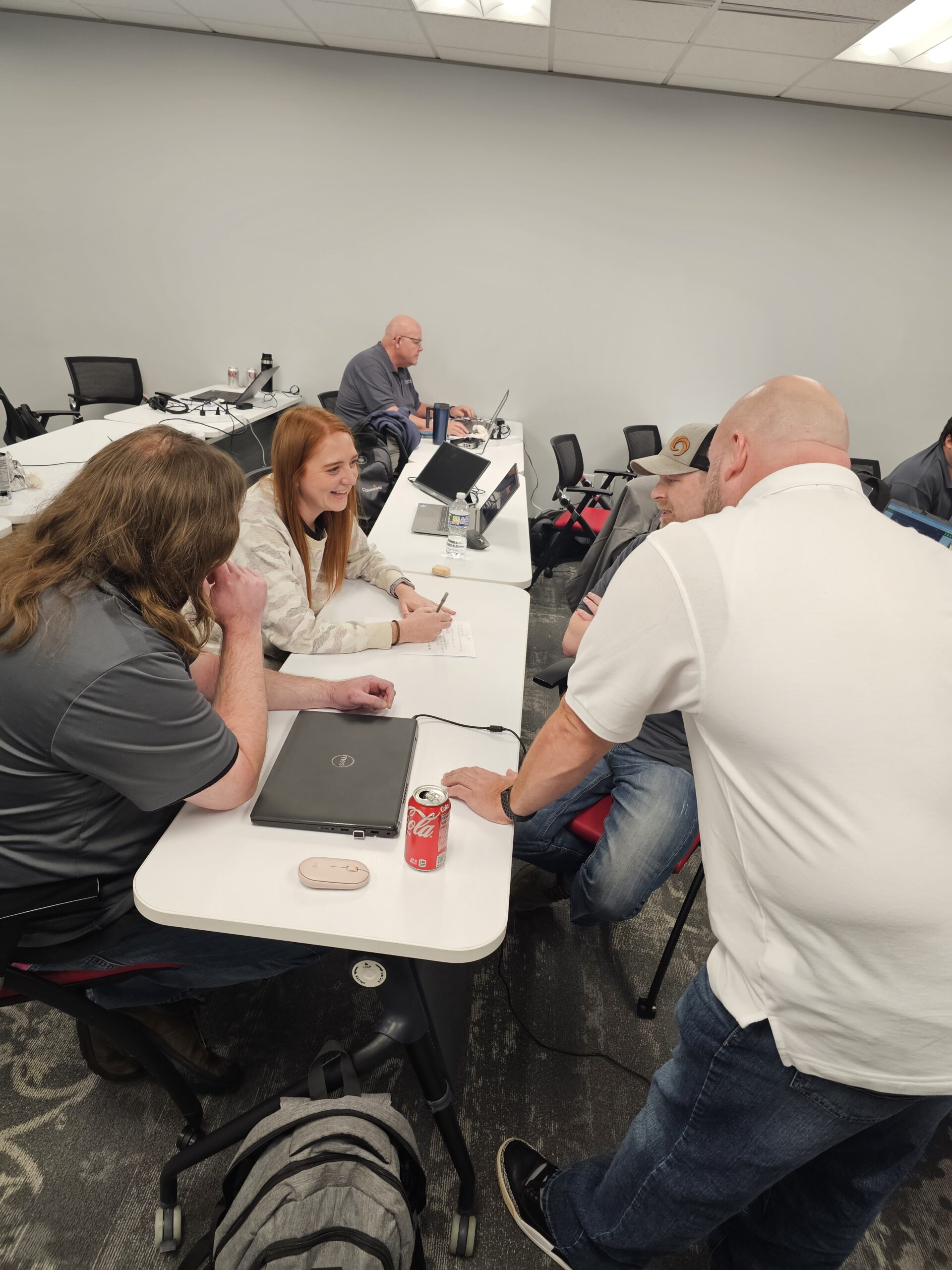
When Blue Alliance acquires a company, the integration timeline is set around the business, not around a calendar. If a founder’s customer base is heavily relationship-dependent and the key account manager has ten-year tenures with the company’s largest clients, the integration pace reflects that. We do not move those customers faster than the relationship can support.
When a founder wants to stay involved for three years, we build a structure that makes that valuable and sustainable. When a founder wants to exit cleanly in six months, we design the leadership transition to make that responsible. When a founder’s operational standards in a specific area are better than ours, we adopt their standards. We have done this. We are not embarrassed by it. A buyer who cannot learn from the companies they acquire is not actually paying attention.
We also acknowledge that we will not be right for every founder or every business. A founder who wants maximum speed to close, the highest possible headline number, and a clean break may find a better fit elsewhere. We are not competing to be all things to all sellers. We are competing to be exactly the right thing for the specific businesses we choose to pursue.
Legacy Is Not Sentiment. It Is Operational.
The last thing we want to address is what we actually mean when we talk about protecting legacy, because it can sound sentimental in a way that makes operators roll their eyes.
When Blue Alliance says we are committed to protecting your legacy, we are not talking about hanging your original logo in a conference room or printing your founding story in a welcome brochure. We are talking about something operational.
Your legacy is the eleven-year customer who renewed without hesitation because your team never gave them a reason to look elsewhere. It is the engineer you hired at 22 who now runs your service desk and holds relationships that took a decade to build. It is the standard of service that made your brand the one your market trusted. These things are replicable in a new owner’s hands. But only if the new owner understands specifically what they are and designs the integration to preserve them.
Do no harm does not mean do nothing. It means do not create new damage in the process of adding value. It means build on what exists rather than replacing it with what is familiar to you. It means earn the trust of the people who depended on the founder before you arrive and ask them to depend on you.
That is the standard we hold ourselves to. It requires more patience, more specificity, and more genuine engagement than a standardized playbook provides. We think it is worth it. The founders and teams who have transitioned with us agree.
Blue Alliance is a low-volume, operator-led MSP investment platform backed by Prairie Capital. We are selective because the approach we’ve described only works when we can give it the attention it deserves.
bluealliance.com